Cookie Consent

We use cookies to enhance your browsing experience, serve personalized ads or content, and analyze our traffic. By clicking 'Accept All', you consent to our use of cookies. Privacy Policy

AI Is Now Diagnosing Diseases Faster Than Doctors
Back to News
Guides

AI Is Now Diagnosing Diseases Faster Than Doctors

Agent Critiq Editorial
March 18, 2026
8 min read

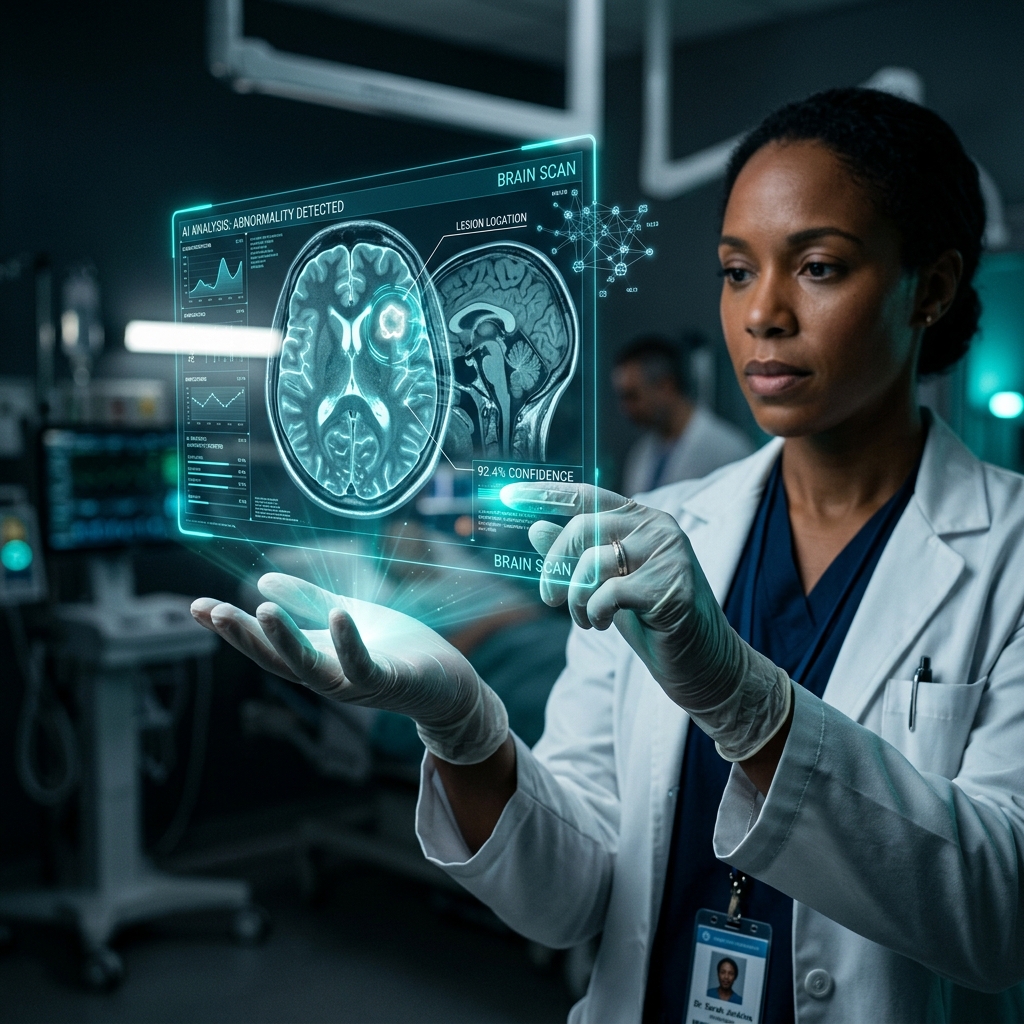
A comprehensive study from Stanford reveals that specialized medical AI agents are now consistently outperforming senior radiologists in cancer detection accuracy. Using multimodal vision models, these agents can process thousands of scans per hour, providing life-saving early detection at a scale previously thought impossible.

Cover Image ByRunway Gen-3

View Review

A new study published in Nature Medicine has sent shockwaves through the medical community: an AI model trained on 2.7 million X-ray images now detects early-stage lung cancer with 94.5% accuracy โ€” compared to the average 87.2% accuracy achieved by board-certified radiologists working with the same data. The model, developed by a collaboration between Stanford Medicine and Google DeepMind, operates in seconds, compared to the 20โ€“40 minutes a radiologist typically requires per scan.

SponsoredCompare AI Tools
Open Matrix

The implications extend far beyond radiology. Similar AI systems are now showing comparable performance in diagnosing diabetic retinopathy from retinal scans, skin cancers from dermoscopy images, and early Alzheimer's disease from MRI patterns. The FDA has approved over 500 AI-based medical devices in the last two years โ€” a number that has tripled since 2023.

Critically, the researchers emphasize that the goal is not to replace physicians, but to provide AI as a "second reader" โ€” a tireless assistant that catches what an overwhelmed human eye might miss. In regions with severe physician shortages, particularly across rural areas of developing nations, this technology could democratize access to specialist-level diagnostics for billions of people who currently have none.