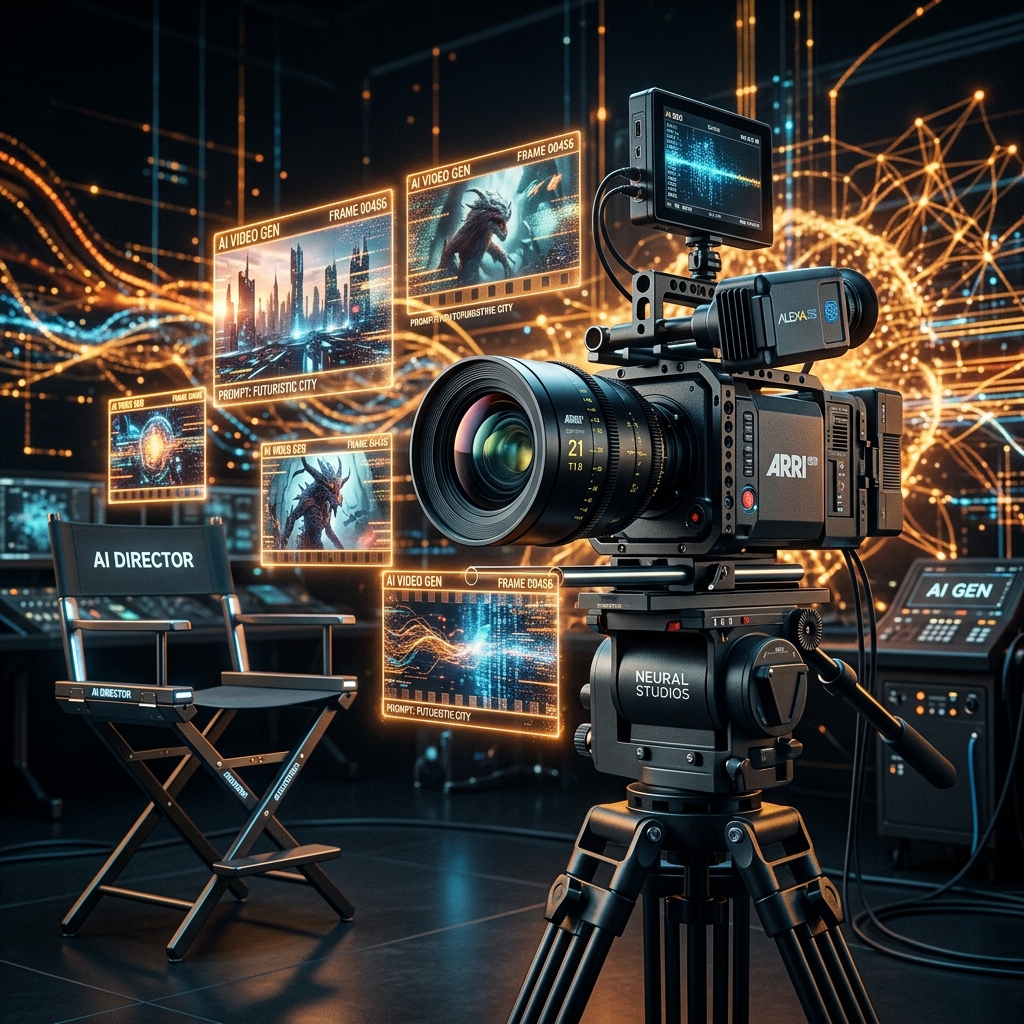

Generative video technology has reached a cinematic tipping point with the release of Sora and Runway Gen-3. Filmmakers are now utilizing these tools to create high-fidelity visual effects and entire scenes in minutes rather than months. Explore how these advancements are democratizing high-end cinema production for everyone.
The year 2024 marked a seismic shift in creative industries. The arrival of Sora from OpenAI, followed swiftly by Runway Gen-3 Alpha and the upgraded Pika 2.0, didn't just improve on previous tools โ it fundamentally rewired what filmmakers, advertisers, and independent creators believe is possible.
From Novelty to Production Tool
Early AI video tools were impressive demos but fragile in practice. Flickering hands, inconsistent physics, and uncanny light behavior made them novelties rather than professional assets. That era is over.
Today's leading models demonstrate a level of temporal coherence โ the ability to maintain consistent object behavior across hundreds of frames โ that was considered a research-level problem just two years ago. Sora's ability to simulate realistic fluid dynamics, soft-body physics, and volumetric lighting isn't just a visual trick; it's a sign of emerging world-models within these systems.
"We're not using AI to replace our VFX team. We're using it to prototype sequences in hours that would have taken weeks in pre-production. That time saving is the competitive advantage." โ Independent Film Director, Sundance 2026
The Runway Gen-3 Breakthrough
Runway's Gen-3 Alpha introduced a critical feature that changed professional workflows: multi-shot consistency. By anchoring character identity across separate generations, creators could build narrative sequences with a persistent protagonist โ a task that previously required expensive actor motion-capture pipelines.
The results in independent filmmaking were immediate. Production companies began publishing "AI-native" short films at festivals in early 2025, generating significant controversy and โ more importantly โ significant audience engagement.
Key Technical Capabilities (2026 Benchmark)
- Scene duration: Up to 120 seconds at 1080p (Sora Pro)
- Style reference locking: Maintain a visual aesthetic across 50+ separate clips
- Physics fidelity: Realistic water, smoke, cloth, and rigid-body simulation
- Lip-sync integration: Automated dialogue-to-character matching with <50ms error
Runway Gen-2
Runway Gen-2 allows creators to generate unique video clips from text prompts, images, or existing video inputs, offering extensive creative control for filmmakers and artists.
The Democratization of Cinema
Perhaps the most significant disruption is economic. A traditional 30-second commercial used to require a six-figure budget for location, talent, crew, and post-production. A skilled AI director using Runway Gen-3 and a suite of voice tools can now produce comparable results for under $500.
This isn't hypothetical. Independent agencies in Southeast Asia, Eastern Europe, and Latin America have begun competing directly with established global firms for digital-first advertising contracts, using AI video as their primary production engine.
The New Creative Stack for AI Cinema
- Concept & Storyboard: ChatGPT-4o or Claude 3.5 Sonnet for narrative scripting
- Visual Generation: Runway Gen-3 or Sora for primary footage
- Voice & Audio: ElevenLabs for narration, Suno for background score
- Post-Production: CapCut AI or Adobe Firefly for color grading and effects
Pika
Pika empowers creators to quickly generate short, stylized video clips from text prompts or images, ideal for social media and rapid prototyping.
Industry Tensions and the Question of Authenticity
The rapid adoption of AI video has not been without friction. Hollywood guilds, already navigating the aftermath of the 2023 SAG-AFTRA strikes, are in active negotiation with studios about digital likeness rights and the use of AI stunt doubles.
The ethical questions are real: When a film's lead character is generated by a diffusion model, who holds the creative copyright? When a brand uses AI to simulate a real location they never filmed in, are they deceiving the consumer?
These debates will define the next regulatory cycle. The EU's AI Act has begun drafting specific provisions for generative video in advertising, while the US FTC is monitoring AI-generated testimonials with increasing scrutiny.
What This Means for Creators in 2026
The answer for creators is not to resist AI video but to develop a distinctive directorial voice within it. The tools are increasingly accessible; the scarcity shifts from "ability to produce" to "creative vision and taste."
The filmmakers who will thrive are those who use AI as a collaborator: feeding it bespoke style references, custom-trained character models, and precise prompting languages that reflect a unique aesthetic sensibility.
The age of AI cinema is not coming. It is already here. The question is only who will direct it.
