Cookie Consent

We use cookies to enhance your browsing experience, serve personalized ads or content, and analyze our traffic. By clicking 'Accept All', you consent to our use of cookies. Privacy Policy

Physical Intelligence Unveils π0.7: The Robot Brain Learning Without Being Taught
Back to News
News

Physical Intelligence Unveils π0.7: The Robot Brain Learning Without Being Taught

Agent Critiq Editorial
April 16, 2026
8 min read

Physical Intelligence's π0.7 breakthrough enables robots to learn complex tasks independently, pushing us closer to true general-purpose AI and autonomous robotics.

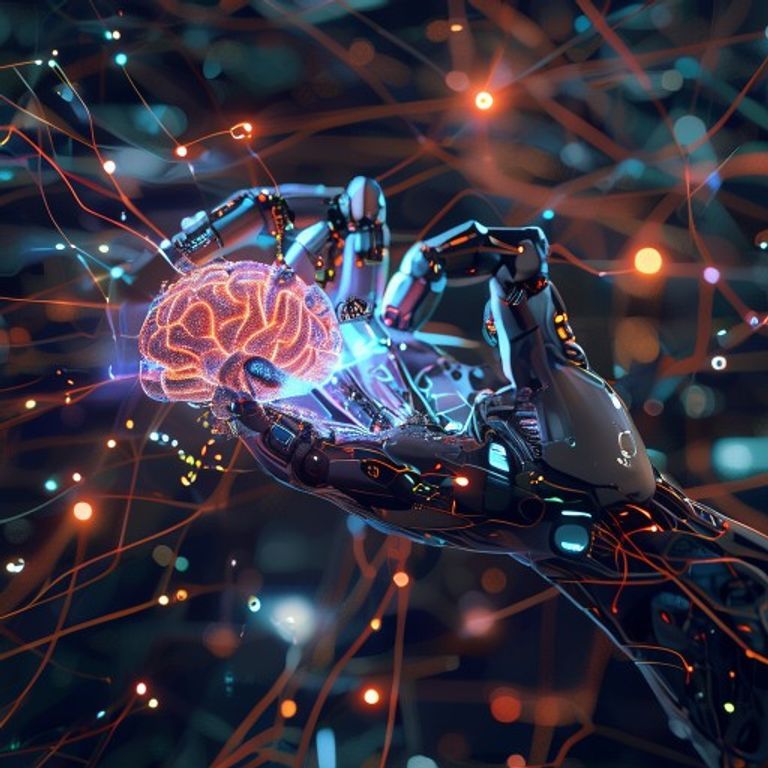
Cover Image ByLeonardo.Ai
View Review

Physical Intelligence Unveils π0.7: The Robot Brain Learning Without Being Taught

"For decades, the dream of a truly general-purpose robot felt like science fiction. With π0.7, we're not just moving a step closer; we're fundamentally redefining how robots acquire intelligence and interact with our world. This isn't about programming; it's about true, emergent physical understanding."Dr. Ava Chen, CEO, Physical Intelligence

The quest for a general-purpose robot brain has long been the holy grail of artificial intelligence and robotics. For too long, robots have been masters of highly specialized, pre-programmed tasks, stumbling when faced with novel situations or objects outside their defined parameters. Enter Physical Intelligence, a trailblazing robotics startup, which has just announced a monumental leap forward: π0.7. This revolutionary new model represents what the company describes as an early, yet profoundly meaningful, step toward a robot brain that can figure out tasks it was never taught.

💡 The Core Innovation / The Landscape

The current landscape of robotics, while impressive in controlled environments, largely relies on explicit programming. Each new task, object, or environmental variation often requires extensive human intervention, re-coding, and re-calibration. This 'brute force' approach severely limits the scalability and adaptability of robotic systems.

Physical Intelligence aims to shatter these limitations with π0.7. Instead of merely executing pre-defined instructions, π0.7 learns to understand the physical world through a process analogous to how humans and animals learn: by interacting, experimenting, and generalizing. This isn't just about better object recognition or improved motor control; it's about developing a foundational understanding of physics, object properties, and actionable common sense in real-world scenarios.

🎯 Why it Matters

The implications of a robot brain capable of untaught task execution are nothing short of transformative for humanity and industry. Here's why π0.7 is a game-changer:

SponsoredCompare AI Tools
Open Matrix
  • Unprecedented Adaptability: Robots will no longer be confined to factories with identical setups. They can operate in dynamic, unstructured environments, adapting to unexpected changes, handling novel tools, and interacting with new objects without requiring costly and time-consuming re-programming.
  • Democratization of Robotics: Lowering the barrier to entry for robot deployment. Businesses and individuals won't need specialized robotics engineers for every new task, leading to wider adoption across sectors from logistics and healthcare to domestic assistance.
  • Addressing Labor Shortages: Robots can take on a vastly expanded range of repetitive, dangerous, or physically demanding jobs, freeing up human workers for more creative, strategic, and empathetic roles.
  • Enhanced Human-Robot Collaboration: Imagine a robot assistant that truly anticipates your needs, not because it was explicitly told, but because it understands the context of a task. This paves the way for more intuitive and effective collaboration in homes and workplaces.
  • Accelerated Innovation: By reducing the development cycle for new robotic capabilities, π0.7 could dramatically speed up the pace of innovation in areas like prosthetics, space exploration, and disaster relief.

⚙️ 'Under the Hood' / Technical Deep Dive

While the full architectural details of π0.7 remain proprietary, Physical Intelligence has revealed key insights into its groundbreaking capabilities:

  • Foundation Model for Embodied AI: Similar to how large language models (LLMs) like ChatGPT Plus learn general language understanding from vast text datasets, π0.7 is trained on immense datasets of physical interactions, simulations, and real-world sensory data. This allows it to develop a broad, transferable understanding of physics and manipulation.
  • Zero-Shot & Few-Shot Task Learning: The core breakthrough. π0.7 can perform tasks it has never encountered before (zero-shot) or learn new tasks with minimal human demonstration (few-shot), significantly reducing training time and data requirements.
  • Hierarchical Reasoning & Planning: The model exhibits capabilities for high-level planning and breaking down complex goals into executable sub-tasks, a critical component for true autonomy.
  • Real-time Environmental Adaptation: Using advanced sensor fusion and predictive modeling, π0.7 can dynamically adjust its actions based on real-time feedback from its environment, including unforeseen obstacles or changes in object properties.
  • Scalable Knowledge Transfer: Once π0.7 learns a new skill or concept, that knowledge can be rapidly transferred and generalized to other robotic platforms or new scenarios, making it highly efficient.
Open Interpreter
EXPERT REVIEW

Open Interpreter

Open Interpreter allows LLMs to interact with and run code on your personal machine to complete tasks, bypassing cloud sandbox limitations with raw terminal access.

Read Review

🏁 Final Verdict

Physical Intelligence's π0.7 is more than just an incremental improvement; it's a paradigm shift in how we conceive of robotic intelligence. By enabling robots to learn and adapt without constant human intervention, π0.7 moves us from specialized tools to general-purpose assistants. While still an "early but meaningful step," as the company states, its potential is immense.

Challenges remain, including ensuring safety in unpredictable environments, refining generalization capabilities across wildly different tasks, and managing computational demands. However, the vision of a robot capable of intuitive, untaught physical intelligence is now closer than ever. AgentCritiq believes π0.7 signals a future where robots are not just automated machines, but truly intelligent, adaptable partners in our physical world.